
Why Most Large Private Events Fall Apart and How to Avoid It.
Most large private events do not fall apart because of bad food, bad guests, or bad intentions. They fall apart because the planning was too casual for the size of the event. That may sound harsh, but it is usually true. At 12 or 15 guests, you can be flexible. People can order separately. The kitchen can adjust. The server can check in one table at a time. Timing can move naturally.
But once you get into 50, 70, 90 guests or more, everything changes.
A large group does not behave like a regular dinner reservation. It needs structure, timing, service flow, and a space that can support the kind of experience the host is trying to create.
Without that structure, the host usually ends up working the event instead of enjoying it.

What Most Hosts Underestimate
The biggest mistake most hosts make is assuming the hard part is getting people together. It is not. The hard part is making the event feel smooth once everyone arrives. That means thinking through questions like:
· How will guests be welcomed?
· Where will people naturally gather?
· How will drinks be handled?
· When will food be served?
· Will guests be waiting too long?
· Will the host need to answer questions all night?
· Will the space feel full, but not crowded?
· Will the timing support speeches, dessert, photos, or a toast?
These are not small details. These are the details that shape how the event feels. When they are handled well, guests barely notice. They simply feel comfortable. When they are not handled well, everyone feels it.
Flexibility Without Structure Creates Stress
One of the most common things people say when planning an event is:
“We just want to keep it simple.”
That makes sense. No one wants the event to feel over planned or stiff.
But here’s the thing. Simple does not mean unstructured.
For larger events, too much open-ended planning usually creates more stress, not less.
· Open ordering can slow down service.
· Unclear timing can delay food.
· Loose guest counts can affect staffing and preparation.
· No defined space can make the event feel scattered.
· No clear format can leave the host managing questions all night.
The goal is not to make the event rigid.
The goal is to create enough structure so the event can feel relaxed.
That is the difference.
Why Banquet-Style Dining Works for Larger Groups
For larger gatherings, banquet-style dining is usually the best format because it gives the event a rhythm.
Guests are not waiting for dozens of separate orders to be taken.
The kitchen can prepare properly.
The service team can time the experience.
Food comes out with more consistency.
The host does not have to manage individual decisions throughout the event.
This matters especially for events like:
· Company holiday parties
· Milestone celebrations
· College graduation dinners for professional programs
· Retirement parties
· Celebrations of life
These events are not just about feeding people. They are about bringing people together for a specific reason.
The food format should support that purpose, not interrupt it.

The Host Should Not Have to Run the Event
A strong private event allows the host to be present.
They should be able to greet guests, sit with family, speak with coworkers, raise a glass, enjoy the food, and actually experience the celebration they planned.
They should not have to spend the night:
· Checking when food is coming out
· Managing guest questions
· Trying to locate staff
· Worrying about drinks
· Explaining timing
· Fixing avoidable problems
This is where the right venue makes a major difference.
A good private event space is not just a room. It is a system.
There should be a plan for service, timing, staffing, food, beverage, layout, and guest flow.
When that system is working, the host feels it.
The event becomes easier.
Why the Space Matters
A venue may be able to fit your guest count, but that does not always mean it can handle the event well.
There is a difference between capacity and comfort.
For larger private events, the space needs to support movement, conversation, service, and atmosphere.
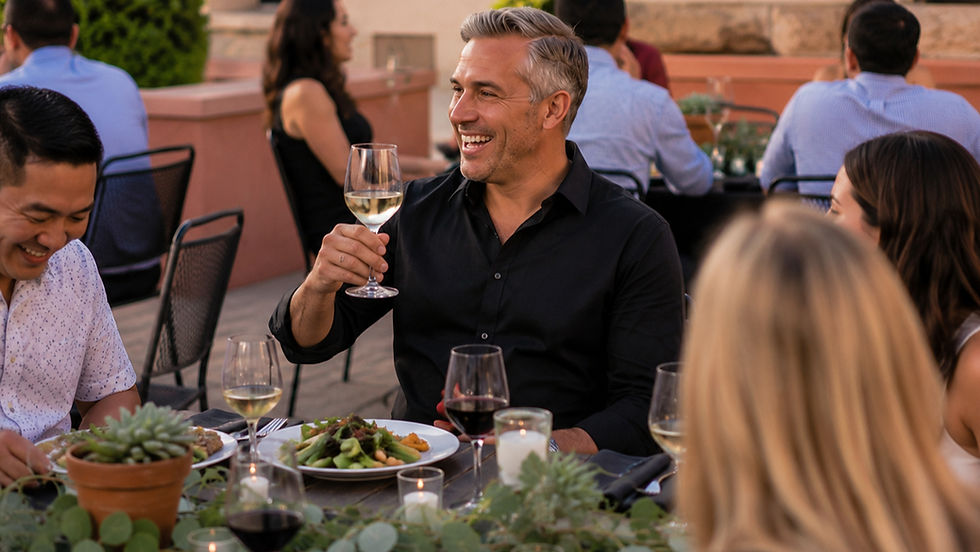
This is why patio events work so well for many larger celebrations. An open-air space gives guests room to move, mingle, and settle in naturally. It creates energy without making the event feel crowded.
For milestone celebrations, retirement parties, company gatherings, and graduation dinners, that kind of environment can completely change the feel of the event.
Indoor spaces also have their place. They work well for smaller, more focused events where conversation, presentations, or a quieter setting matter more.
The right space depends on the tone of the event.
That is why the planning conversation matters.
Food and Beverage Should Be Planned Early
Food and beverage are not just menu decisions.
They affect the entire event.
The menu determines kitchen timing.
The guest count affects preparation.
Bar service impacts flow.
Dessert timing can shape the second half of the event.
Hosted bar options can help the host create a better guest experience while keeping the event controlled.
When these pieces are planned early, the event feels more polished.
When they are left open too long, the event becomes harder to manage.
That is why final guest count, menu selections, beverage planning, and timing all matter.
The more complete the plan is before the event, the easier the event feels during the event.

What a Well-Run Large Event Feels Like
A well-run event does not feel overmanaged.
It feels natural.
Guests arrive and know where to go.
Drinks are available without confusion.
Food comes out when it should.
Staff is present without being intrusive.
The room has energy.
The host is relaxed.
People are not waiting around wondering what happens next.
That is the standard.
The goal is not just to host a large group.
The goal is to make a large group feel easy.
That does not happen by accident.
It comes from planning, staffing, timing, food, beverage, and a venue that understands how private events actually work.

Final Thought
Large private events fall apart when people treat them like oversized dinner reservations.
They work when they are planned like real events.
That means the right space, the right format, the right service team, and the right expectations from the beginning.
When those pieces are in place, the host does not have to carry the night.
The event carries itself.
Planning a Larger Private Event?
If you are planning a company holiday party, milestone celebration, graduation dinner, retirement party, celebration of life, or full restaurant buyout, the best first step is completing our private event inquiry form.
Once we receive your details, we can help guide you through the best space, menu format, timing, guest flow, and next steps.
Submit your inquiry here:
After completing the inquiry form, you may schedule a consultation so we can walk through the event properly and help you plan with confidence.


Comments